Whitepaper: AI is widely used in maintenance, but knowledge retention is lagging behind
Generative AI has found its way into maintenance departments, but is still rarely used for fault diagnosis, technical documentation and the preservation of expert knowledge. This is one of the findings of a live survey conducted during the BEMAS seminar Knowledge Retention with AI on 4 June 2026. The results have been compiled into a new white paper, offering insights and recommendations for maintenance organisations.
During the seminar, BEMAS used Mentimeter to survey maintenance and reliability professionals about their current use of AI, the risks of knowledge loss and the potential of emerging applications. Between 37 and 42 professionals responded to each question.
The results reveal a striking contrast: confidence in AI is high, but its adoption for knowledge-intensive maintenance tasks remains limited.
AI is widely adopted, but mainly for simple tasks
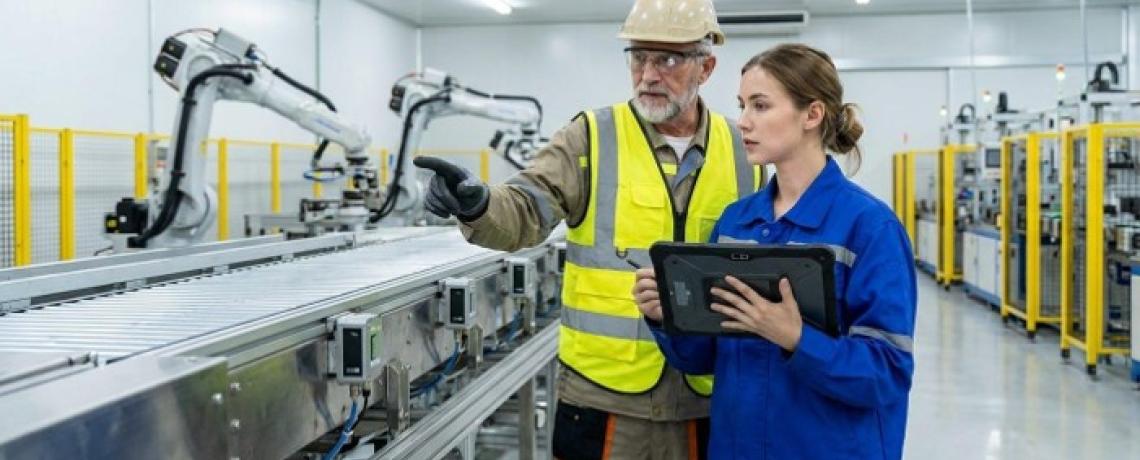
Of the 39 respondents, 36 report using generative AI regularly or daily. For 16 participants, this even involves intensive daily use at work.
However, this familiarity has yet to translate into widespread adoption within technical maintenance processes.
AI is primarily used for administrative tasks, summarising documents and answering questions. Its use is significantly lower for more specialised applications, such as Root Cause Analysis (RCA), technical documentation and maintenance planning.
Traditional information sources also remain dominant when troubleshooting equipment failures. Technicians mainly consult digital manuals, internal documentation systems and maintenance history records in their CMMS/EAM systems. AI-powered documentation systems with chatbots rank lowest as an information source, scoring just 1.2 out of 4.
The technology is therefore already in use, but has yet to reach the core of maintenance operations.
You can find the full white paper at the bottom of this blog post.
Knowledge loss is considered a significant risk
The departure of experienced maintenance technicians presents a significant challenge for industrial organisations. When employees leave, they take with them not only technical knowledge but also valuable practical experience that is rarely fully documented.
Examples include recognising unusual machine noises, diagnosing recurring equipment failures and correctly adjusting older installations.
Respondents rate the risk of knowledge loss at 4.1 out of 5. At the same time, they believe AI can help capture this expertise, make it accessible and transfer it to other employees.
Four applications of AI-powered knowledge retention
The survey explored four possible approaches to improving the retention and accessibility of technical knowledge.
- Expert knowledge: Generative AI can help capture the tacit knowledge of experienced employees and make it available to other technicians.
- Decision trees: AI can support the creation and improvement of decision trees that guide technicians step by step through fault diagnosis.
- Digital twins of expertise: In addition to digital models of physical assets, technical documentation and human expertise can also be made digitally accessible.
- AI agents as knowledge resources: Specialised AI systems can consult relevant sources and support technicians in carrying out knowledge-intensive tasks.
AI agents in particular are generating considerable interest. Respondents rate their potential value in maintenance departments at 4.5 out of 5, the highest score in the survey.
Interestingly, however, Agentic AI is much less firmly established on corporate agendas, scoring just 3.1 out of 5.
From AI experimentation to systematic knowledge retention
The findings highlight a significant challenge. Maintenance organisations recognise the risk of knowledge loss and the potential of AI, but have yet to translate this awareness into concrete applications.
The white paper therefore outlines a four-step roadmap:
- Build on existing AI applications and strengthen employees' skills.
- Make technical documentation, manuals and maintenance history searchable using AI.
- Launch a clearly defined pilot project, such as an AI-assisted decision tree for a common equipment failure.
- Embed knowledge retention into the digitalisation strategy, with clear ownership and a dedicated budget.
Throughout this process, data quality, reliable information sources and human validation remain essential. AI should support the expertise of maintenance technicians, not replace their critical thinking skills.
What does this mean for maintenance organisations?
The white paper makes it clear that the next step does not necessarily involve implementing increasingly advanced AI technology.
The greatest opportunity lies in making better use of information that is already available: technical documentation, maintenance history and employees' experience.
By systematically capturing this knowledge and making it accessible, organisations can reduce their dependence on individual experts and lay the foundations for more sustainable knowledge transfer.
FAQ
How can AI help preserve the technical knowledge of experienced maintenance technicians?
Generative AI can help capture, structure and make practical experience and expertise accessible. Examples include fault diagnosis, machine-specific knowledge, maintenance history and troubleshooting solutions that are not documented in existing manuals. This allows valuable expertise to remain available even after experienced employees leave the organisation.
How can generative AI be used for fault analysis and troubleshooting?
Generative AI can support technicians by bringing together relevant information from maintenance manuals, fault history records and technical procedures. Combined with decision trees, AI can help systematically investigate potential causes of equipment failures. Its reliability depends on the quality of the available information and validation by technical experts.
What is the difference between an AI chatbot and an AI agent in maintenance?
An AI chatbot primarily answers questions based on available information. An AI agent can also access multiple information sources, perform tasks and support process steps. In maintenance, AI agents can, for example, combine technical documentation and maintenance history to provide technicians with more targeted assistance.
How do you get started with AI-powered knowledge retention in a maintenance organisation? Converteren naar PDF
Start with a clearly defined application, such as making technical manuals more accessible or developing an AI-assisted decision tree for a recurring equipment failure. First, ensure that documentation is reliable, responsibilities are clearly defined and experienced employees validate the information. Only expand the application once its usefulness and reliability have been sufficiently demonstrated.
Can AI help mitigate the loss of technical expertise due to retirement?
AI can help reduce the risk of knowledge loss, but it cannot fully replace human expertise. Tacit knowledge in particular, such as recognising unusual machine noises or assessing complex equipment failures, must first be carefully captured and documented. Combining AI-powered documentation with direct knowledge transfer between experienced and younger technicians therefore remains essential.
Download the white paper "Knowledge Retention with AI: How Generative AI Can Preserve Expertise in Maintenance" Converteren naar PDF
How far has the use of generative AI for knowledge retention in maintenance progressed? This white paper brings together the survey findings, including charts, insights into AI agents, digital twins and decision trees, and practical recommendations for maintenance organisations.
Watch the webinar recording: Knowledge Retention with AI Converteren naar PDF
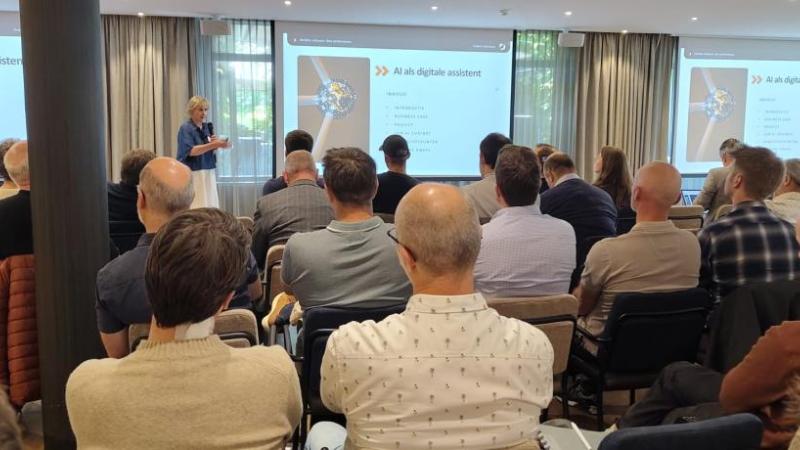
Seminar Recap: Knowledge Retention with AI
BEMAS Corporate Sponsors