Global Maintenance Day 2026: Maintenance as a Foundation for Resilience in an Uncertain World
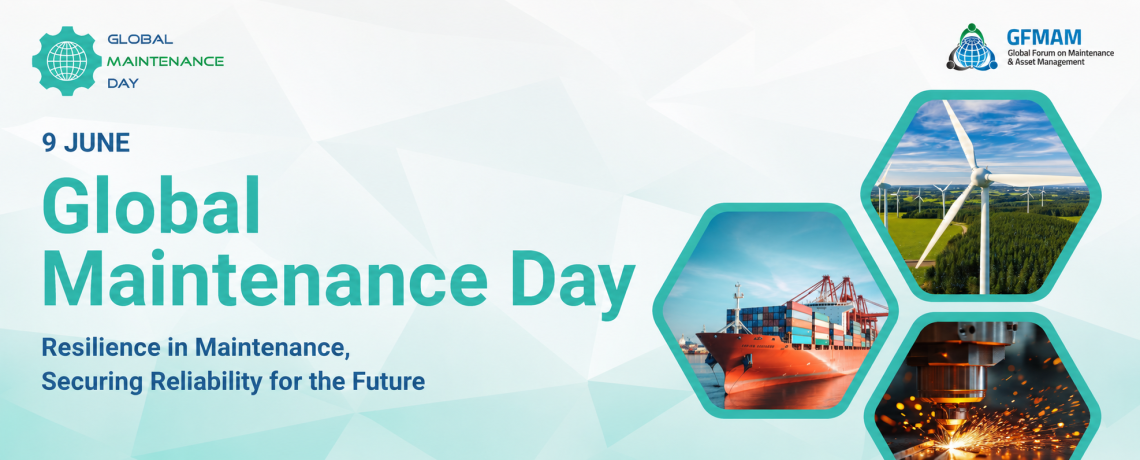
On 9 June we celebrate Global Maintenance Day 2026, the day we pause to recognise the people who keep installations, infrastructure and essential services running day after day. This year's theme: Resilience in Maintenance, Securing Reliability for the Future. Because resilience isn't built during a crisis, it's built every day, quietly, by the right people with the right expertise.
Global Maintenance Day 2026: Maintenance as a Foundation for Resilience in an Uncertain World
Brussels, 3 June 2026 – On 9 June, we celebrate the fourth edition of Global Maintenance Day, an international day that shines a spotlight on the importance of maintenance and technical services worldwide. On this occasion, BEMAS, the Belgian professional association for maintenance and asset management, calls on businesses and citizens alike to give maintenance professionals the recognition they deserve.
According to BEMAS, their work is still too often only noticed when installations break down, whereas good maintenance is precisely what keeps production, infrastructure, energy supply, healthcare and mobility reliably running.
The theme of Global Maintenance Day 2026 is Resilience in Maintenance, Securing Reliability for the Future. Against a backdrop of geopolitical tensions, energy uncertainty, climate challenges and vulnerable supply chains, BEMAS emphasises that maintenance is far more than a technical support function: it is a strategic prerequisite for a reliable and resilient society.
Maintenance is crucial to making that resilience possible. It helps organisations prevent failures, manage incidents, limit risks, guarantee safety and ensure continuity. Without maintenance, there is no reliable production, no safe infrastructure, no stable energy supply, no high-performing healthcare and no functioning technological society.
Maintenance makes organisations resilient before things go wrong
Resilience is not built at the moment a crisis erupts. It is prepared in day-to-day operations: through inspections, preventive maintenance, reliability analyses, condition monitoring, criticality assessments, maintenance planning, spare parts management, technical expertise and continuous improvement.
When assets remain safe, available and reliable, organisations can respond more quickly to unexpected events. A well-maintained installation breaks down less often, recovers faster after an incident and supports the continuity of production and services. This applies to industrial companies, but equally to hospitals, transport infrastructure, water treatment, data centres, energy production, public buildings and logistics networks.
"Maintenance only becomes visible when something goes wrong. But the opposite is true: good maintenance keeps systems running, keeps risks under control and allows organisations to recover faster when something does go wrong. That is what makes maintenance a foundation of resilience," says Wim Vancauwenberghe, director of BEMAS and initiator of Global Maintenance Day.
BEMAS also warns that this resilience is under pressure if investment in technical talent does not increase. In 2026, the profession of technician remains one of the most critical shortage occupations. Without enough maintenance technicians, reliability engineers, planners and technical managers, companies and public infrastructure will no longer be able to guarantee their reliability.
Maintenance as a lever for sustainability
Resilience and sustainability are closely intertwined. Installations that last longer, consume less energy and operate more reliably reduce both the ecological and economic pressure on organisations.
The MORE4Sustainability project, coordinated by BEMAS with the support of Interreg North-West Europe, shows that organisations that make their maintenance strategies more sustainable can achieve up to 31% gains in energy efficiency and a 28% reduction in CO₂ emissions within a relatively short timeframe.
Smart maintenance helps organisations limit energy losses, prevent failures, keep assets in use longer and plan investments more effectively. Extending the lifespan of installations and infrastructure is also a concrete contribution to the circular economy. In a context of rising material prices, increasingly scarce raw materials and stricter sustainability targets, maintenance is becoming an ever more important form of strategic risk management.
Make maintenance visible on 9 June
9 June's Global Maintenance Day is the perfect moment to reflect on that crucial role. But you can go further than just one day. Whether you lead an organisation, manage a team or simply know someone who makes sure systems keep running every day: recognise that work, invest in it and give it the strategic attention it deserves. Because a reliable, safe and resilient society starts with the people who keep it running, day after day.
Make maintenance visible on June 9
On Global Maintenance Day, we take a moment to recognise the people who keep installations, infrastructure and essential services running day after day. Join us and give maintenance the recognition it deserves.
BEMAS Corporate Sponsors