From Static to Dynamic Reliability-Centered Maintenance (RCM): A Knowledge-Driven Framework for Specific Inspection-Maintenance Planning
Turning RCM into a dynamic, asset-specific process for smarter inspection and maintenance planning
Reliability-Centered Maintenance (RCM) provides a systematic methodology for developing maintenance programmes that balance safety, reliability, availability, cost and regulatory requirements. In practice, however, conventional RCM studies are often labour-intensive, rely heavily on expert knowledge and are performed as periodic engineering exercises. This means that maintenance strategies are frequently developed for equipment classes rather than tailored to the characteristics and condition of individual assets.
At the same time, the condition, operating environment, degradation and risk profile of your assets continue to evolve throughout their operational life. Inspections, condition monitoring, operational data and maintenance activities continuously generate new information, but this knowledge is not always systematically incorporated into the original RCM analysis. As a result, maintenance programmes can gradually become disconnected from the actual condition and risk of individual assets.
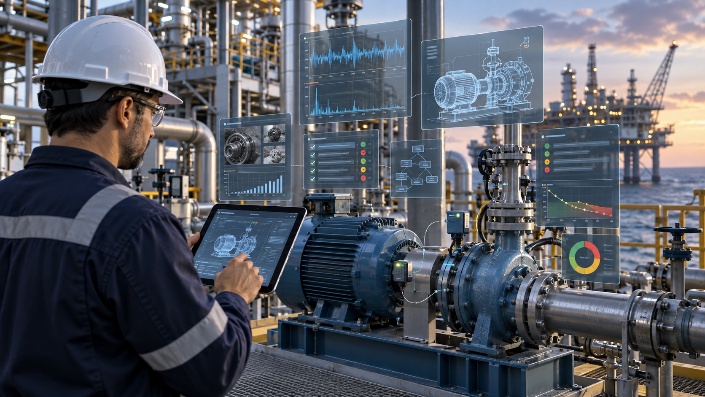
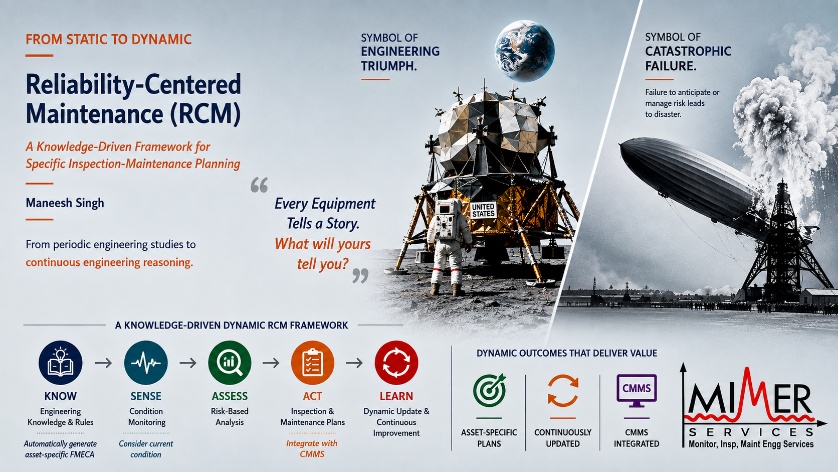
A dynamic approach to RCM can help close this gap. By combining engineering knowledge with asset-specific data and continuously incorporating new inspection, monitoring and maintenance information, RCM can evolve from a static, document-based study into an updating engineering reasoning process. During this seminar, you will discover how a knowledge-driven computational framework can support asset-specific FMECA, condition monitoring and risk-based inspection and maintenance planning, while maintaining engineering transparency and expert oversight.
Content of the webinar
Limitations of conventional RCM
- Why periodically performed RCM studies can become disconnected from changing asset conditions.
- Challenges related to labour-intensive analyses and dependence on expert knowledge.
From equipment-class strategies to asset-specific maintenance
- Moving beyond generic maintenance programmes.
- Accounting for the specific configuration, operating conditions, degradation and risk profile of individual assets.
The concept of dynamic RCM
- Transforming RCM from a periodic engineering exercise into a continuously updating process.
- Updating engineering analyses as new asset information becomes available
Knowledge-driven identification of degradation and failure
- Identifying relevant degradation mechanisms, failure mechanisms and failure modes.
- Using engineering knowledge together with asset-specific information.
Equipment-specific FMECA
- Automated development of asset-specific FMECA.
- Updating the analysis as operating conditions, inspection findings and asset condition change.
Integration of multiple data and knowledge sources
- Condition monitoring data and inspection findings.
- Maintenance history and operational information.
- Structural and equipment attributes, protection systems and engineering knowledge.
Combining different AI and engineering techniques
- Knowledge-based reasoning.
- Machine learning and fuzzy reasoning.
- Large Language Models (LLMs).
- Specialised engineering models at different stages of the workflow.
Dynamic risk-based inspection and maintenance planning
- Generating asset-specific inspection and maintenance plans.
- Updating plans when new evidence becomes available
- Integrating the resulting plans with the Computerised Maintenance Management System (CMMS).
Engineering transparency and human oversight
- Maintaining traceability of engineering decisions.
- Understanding the role of expert judgement in AI-assisted maintenance decision-making.
- Using AI to complement rather than replace engineering knowledge.
You learn how RCM can evolve from a periodic, document-based activity into a continuously updating engineering process and how engineering knowledge, asset data, inspection results, condition monitoring and AI techniques can be combined to create specific inspection-maintenance plans for individual assets. You will also gain insight into the importance of transparency, traceability and expert oversight when applying AI to maintenance decision-making. Join the seminar to explore how this approach could contribute to the next generation of intelligent asset management systems.
Practical Information
- 10:45 Welcome to the BEMAS Live Learning Platform
- 11:00 Start of the presentation
- 12:00 Conclusion and Q&A

About the speaker
Prof. Maneesh Singh – Technical Advisor, MIMER Services AS
Prof. Maneesh Singh has more than 30 years of industrial, research and academic experience in asset integrity, reliability, inspection and maintenance engineering. His career spans the oil & gas, process, materials and engineering sectors, with senior positions at organisations including DNV, Global Maritime, AGR EmiTeam, Elkem, Imerys Minerals and Tata Research Development and Design Centre.
At DNV, he contributed to the development of DNV-RP-G101 for Risk-Based Inspection (RBI) and to RBI methodologies and software for offshore installations.
He is currently Professor of Operations and Maintenance Engineering at Western Norway University of Applied Sciences (HVL) and Founder and CEO of MIMER Services AS. His work focuses on Reliability-Centered Maintenance (RCM), Risk-Based Inspection (RBI), condition monitoring, predictive maintenance, risk and reliability, and knowledge-based decision support.
Prof. Singh holds two PhDs, in Offshore Engineering and Process Metallurgy, providing him with a multidisciplinary background spanning structural integrity, degradation, materials, maintenance engineering and industrial asset management.
Keep me posted
BEMAS Corporate Sponsors