How to optimize the reliability, maintenance and service life of slip-ring induction motors
During this webinar, you gain a practical understanding of how slip-ring induction motors work, which parameters deserve particular attention during commissioning and operation, and how appropriate brush selection, inspection and maintenance practices help you prevent failures and extend service life.
A slip-ring induction motor is a three-phase AC motor with a wound rotor connected to external resistors via slip rings. This design makes it particularly suitable for high-inertia loads, as it can provide high starting torque while limiting the starting current. By varying the external resistance, you can influence the starting behaviour and acceleration of the motor, which makes this type of machine well suited to heavy-duty industrial applications such as mills, conveyors, shredders, cranes, hoists and, in some cases, compressors.
That flexibility comes with additional maintenance requirements. Compared with a squirrel-cage induction motor, a slip-ring motor is more complex and more expensive to build, while its brushes and slip rings are subject to wear and therefore require regular inspection and maintenance.
The interaction between slip rings, carbon brushes and brush holders is therefore critical. Brush material, contact pressure, current density, surface condition and environmental factors all influence the formation of the protective patina on the slip ring. If these conditions are not right, you can face accelerated brush wear, excessive carbon dust, sparking or even flashover. The actual operating load also matters: when a motor runs significantly below its rated output, the resulting current density can make the original brush configuration less suitable.
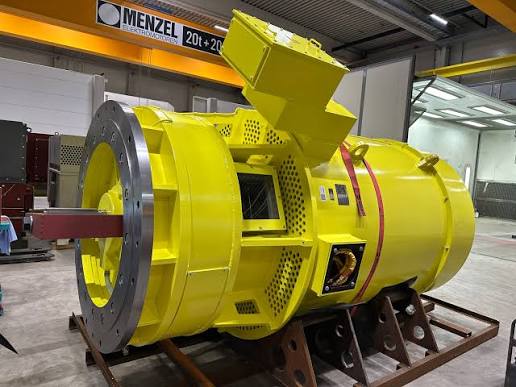
Content of the webinar
Background and Design
- How slip-ring induction motors work and why they remain relevant for applications requiring high starting torque, low starting current or operation under demanding conditions.
- Typical applications include mills, conveyors and shredders.
Main Components of Slip Ring Assembly / Main Components of Brushes / Main Components of Brush Holders
- Key differences in slip-ring, brush and brush-holder designs and materials.
- How to select the appropriate brush and why newer brush materials can offer advantages compared with materials used in older installations.
Commissioning: Put into Operation / Protective Patina Layer During Run-In
- Preparing slip rings and brushes correctly before start-up and after long standstill periods.
- Why correct current density is essential for forming a stable patina and preventing excessive brush wear, carbon dust and the resulting risk of flashover.
Operational Maintenance
- What to inspect and maintain to prevent sparking, uneven brush wear, contamination and deterioration of the slip-ring surface.
- Why the actual operating load matters: motors often run below their rated output, which can require recalculation or adjustment of the brush configuration.
Starting of Slip Ring Machines / Short-Circuit and Brush-Lifting-Gear
- Matching the starting resistor to the motor and application, particularly for high-inertia loads and long starting times.
- How brush-lifting and short-circuit systems can help when load conditions vary or when the slip-ring system is mainly required during start-up.
Encapsulated Slip Rings and Dust Filters
- Managing conductive carbon dust, maintaining filtration and reducing the risk of flashover and insulation problems.
About the speakers
Dipl.-Ing. Guido Wolf has around 30 years of professional experience in engineering sales. At Menzel Elektromotoren, his work includes medium-voltage motor applications and sales, supported by extensive experience in the planning and organisation of motor warehousing.
Dipl.-Ing. Stefan Mootz brings more than 30 years of experience in engineering sales for medium- and high-voltage motors. His career includes positions with several European and Asian motor manufacturers. At Menzel Elektromotoren, he works in quality assurance, claims management and after-sales support, where he focuses on technical issues and practical solutions for industrial motor applications.
Practical information
10:45 Welcome to the BEMAS Live Learning Platform
11:00 Start of the presentation (English spoken)
12:00 Conclusion and Q&A
- Free for members of companies who are a member of BEMAS
- Free for invitees of Menzel.
- € 35,- per person excl. VAT for non-members
In cooperation with

Keep me posted
BEMAS Corporate Sponsors