Community Open Standards for sharing Asset Data - Hands-on Workshop: Structuring and Sharing Asset Data with the Asset Administration Shell
In your role as asset owner, asset manager of maintenance professional, you are confronted daily with fragmented asset data, stored in CMMS, ERP systems, OEM manuals, spreadsheets, or siloed databases. As industrial operations become increasingly digital and interconnected, this fragmentation becomes a serious obstacle. Reliable, efficient maintenance and lifecycle management require more than data availability. They demand structured, standardised, and interoperable data.
To support digital transformation, IT/OT integration, and collaboration with OEMs or service partners, your data needs a common language. But many assets were never designed with this in mind. How can you turn existing maintenance and operational data into a future-proof structure that enables better reliability, smarter collaboration, and reduced downtime?
In this hands-on workshop, you’ll get a practical introduction to the Asset Administration Shell (AAS), the cornerstone of open, standardised asset data exchange in Industry 4.0. This workshop is specifically tailored for asset owners and technical data professionals. You'll learn how AAS can be applied to existing assets to better structure, validate, and share your asset data in line with international standards. This is not just theory: you’ll work with real tools and build AAS models, real asset data, and leave with concrete results.
Workshop Content
- Practical introduction to the Asset Administration Shell
- What is AAS and how does it enable digital twins and interoperability?
- AAS architecture and submodel concept
- Use cases tailored to asset owners
- Step-by-step creation of AAS models for existing operational assets
- Step-by-step modelling from existing documentation
- Mapping maintenance and operational data to AAS submodels
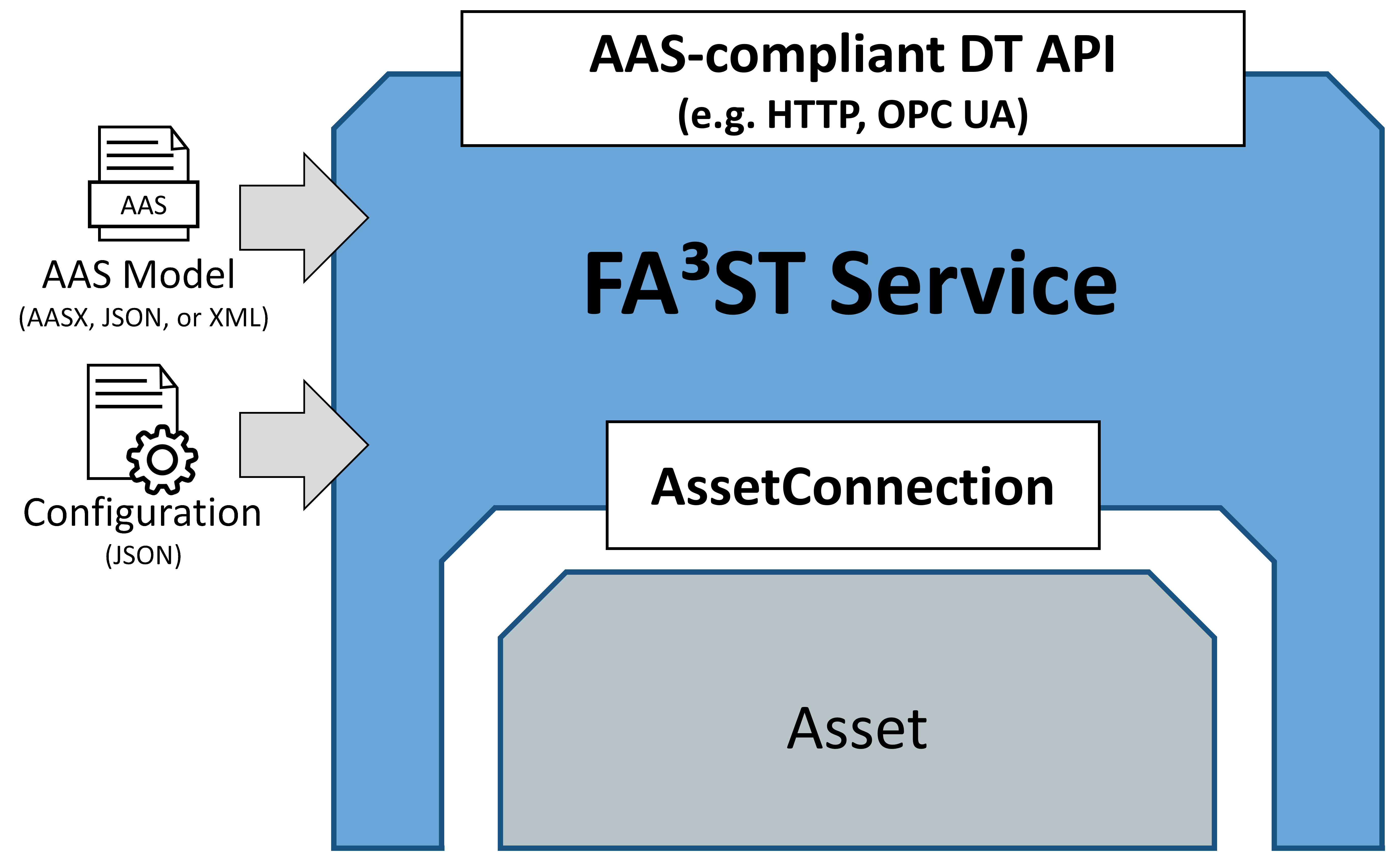
- Validation of AAS models using FAST3 tooling, a practical tool developed by Fraunhofer for creating, validating, and structuring asset models in line with Industry 4.0 Standards
- Interactive exercises supported by experienced trainers
You’ll learn how to build and validate AAS models for assets already in operation.
You’ll gain clarity on how to structure maintenance and operational data using AAS concepts and how to share this data effectively within and beyond your organisation. Don’t miss this opportunity to gain hands-on experience with AAS in a real-world context.
BE SURE TO BRING
- Your laptop and asset descriptions and technical data sheets (in PDF format) of your own assets to get started with the AAS models.
- Any existing technical documentation of assets e.g., manuals, specification sheets, interface descriptions, or similar material
Learning Objectives of the Workshop
After completing this hands-on session, participants will be able to:
- Understand the concept and structure of the Asset Administration Shell (AAS)
Learn how AAS enables standardised, interoperable asset data representation across systems and stakeholders. - Translate existing asset, maintenance, and operational data into structured AAS submodels
Apply AAS principles to real-world, in-operation assets, even those not originally designed for digitalisation. - Use the FAST3 tool to model, validate, and check asset data
Gain practical experience in building AAS models and ensuring compliance with open standards. - Assess how AAS supports collaboration, reliability, and lifecycle asset management
See how structured asset data improves coordination with OEMs, service partners, and internal teams. - Identify concrete next steps for applying AAS in your organisation
Explore how AAS can be used for internal pilots, proof-of-concepts, or as part of broader Industry 4.0 initiatives.
You will leave this workshop with hands-on experience, a clear understanding of open asset data standards, and the ability to take practical next steps toward structured, interoperable asset management.
Target audience
This workshop is designed for professionals responsible for structuring, managing, or exchanging asset-related data in industrial environments. It is particularly relevant for asset owners, asset managers, maintenance managers, reliability engineers, technical data managers, CMMS/EAM key users, digital transformation leads in Industry 4.0 or IIoT contexts, and IT/OT integration specialists. Anyone working to improve data quality, enable digital twins, enhance collaboration with OEMs and service partners, or support lifecycle asset management through interoperable data standards will benefit directly from this sessio

About the speakers
Marc Leon Haller, M.Sc. is a Research Associate in the Smart Factory Systems group at Fraunhofer IOSB, where he works on the cutting edge of industrial digitalisation. With a background in Business Administration and Engineering from HKA Karlsruhe (2019–2024), Marc bridges the gap between technical systems and business needs in manufacturing environments.
His research focuses on interoperability, semantic technologies, and the application of Generative AI in manufacturing. He is also engaged in topics related to the circular economy, aiming to support more sustainable and data-driven industrial processes.
Marc contributes to several key innovation projects, including Tech4MaaSEs, MODAPTO, and Bi0Space, where he explores how digital standards and technologies such as the Asset Administration Shell can enhance modularity, flexibility, and data exchange across industrial ecosystems.
He brings hands-on experience in designing and implementing data models that support long-term lifecycle management, interoperability, and standardisation — critical components in Industry 4.0 and Maintenance 5.0 initiatives.

Maximilian Kühn, M.Sc. is a Research Associate in the Smart Factory Systems group at Fraunhofer IOSB. With an academic background in Physics from LMU Munich (2014–2020), Maximilian applies analytical and system-level thinking to complex challenges in industrial digitalisation and data interoperability.
His work focuses on enabling interoperable data exchange, the development of Digital Product Passports (DPP), and advancing circular economy strategies through standardised, lifecycle-oriented data models. He is actively involved in pioneering projects such as Factory-X and Dataspace 4 DPP, which aim to realise transparent, secure, and standard-based data spaces across value chains.
Maximilian brings a strong systems engineering mindset to his work, supporting the design and implementation of digital infrastructures that make product and asset information accessible and usable — from creation through reuse, recycling, or remanufacturing. His expertise contributes directly to the development of practical, scalable solutions for digital transformation in manufacturing.
Interested in the full Learning Network program but haven't registered yet?
What is the Asset Administration Shell?
The Asset Administration Shell (AAS) is a standardised digital representation of an asset, developed within the framework of Industry 4.0 by Plattform Industrie 4.0. It acts as a digital twin that collects, organises, and structures all relevant information about a physical or logical asset — such as machines, components, or entire systems — in a uniform and interoperable format.
The AAS:
- Provides a structured digital container for asset data, including technical specifications, maintenance history, operating conditions, and documentation.
- Organises this data into standardised submodels, such as Digital Nameplate, Handover Documentation, Technical Data, and Capability Description.
- Enables interoperability by using open, vendor-neutral standards for data exchange across systems (e.g., CMMS, ERP, PLM) and organisations (e.g., OEMs, service providers).
- Supports lifecycle data management, making it easier to maintain consistency and traceability from installation to decommissioning.
In essence, the AAS creates a common data language that allows different systems and stakeholders to access, interpret, and use asset-related information consistently, enabling collaboration, digitalisation, and automation across the asset lifecycle.
Keep me posted
BEMAS Corporate Sponsors