Career in maintenance and asset management: roles, training and career opportunities
A career in maintenance today involves much more than repairing machinery. Maintenance professionals play a key role in the reliability, safety, sustainability and performance of industrial assets. Beyond technical roles, there are increasing opportunities to progress into engineering, reliability, maintenance management and strategic asset management.
But what career paths are available in maintenance? What skills do you need to progress into a management or specialist role? And which training programmes in Belgium can help you achieve your ambitions? This article explores how to build a successful career in maintenance and asset management.
In which industries can you work as a maintenance professional?
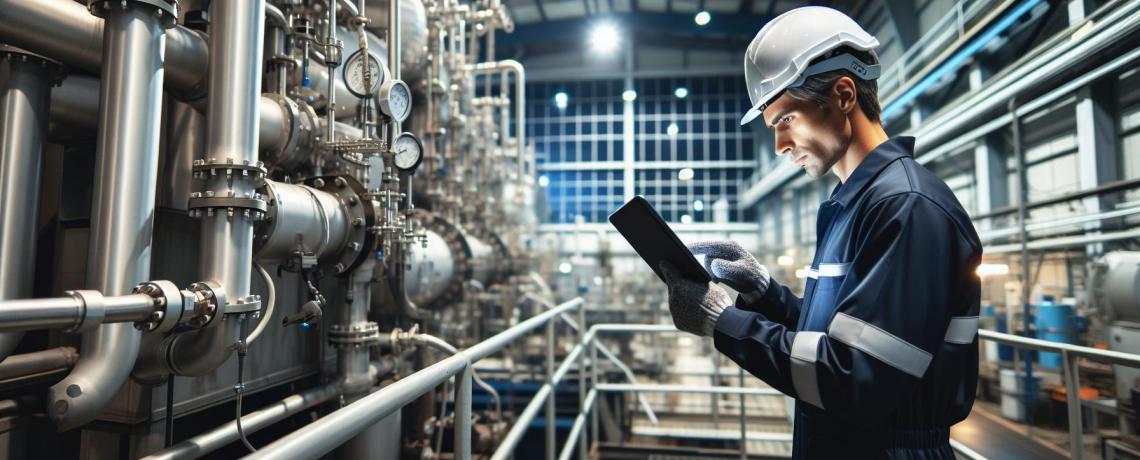
Maintenance professionals work in virtually every industry where technical installations and physical assets play an important role.
Manufacturing and process industries
In the chemical, petrochemical, pharmaceutical, food and manufacturing industries, the reliability of production equipment is essential.
Maintenance Engineers and Reliability Engineers work to reduce unplanned downtime and improve maintenance strategies. Maintenance Managers lead maintenance organisations and ensure the efficient allocation of people, resources and budgets.
Energy and utilities
Power plants, wind farms, distribution networks and water treatment facilities require professional maintenance and asset management.
Long-term reliability, risk management, condition monitoring and asset life extension are central priorities in these industries.
Transport, logistics and infrastructure
Railways, ports, airports and logistics centres rely on complex technical infrastructure.
Maintenance professionals face the challenge of keeping assets safe and available while planning maintenance activities as efficiently as possible.
Buildings and technical facilities
Hospitals, data centres, schools and commercial buildings require professional management of electrical installations, HVAC systems and other building services.
These environments also offer opportunities to progress from technical maintenance to maintenance management and strategic asset management.
Technical services and consultancy
In addition to working within industrial companies, maintenance professionals can pursue careers with maintenance service providers, technology suppliers and specialised consultancy firms.
As a Maintenance Consultant, Reliability Consultant or Asset Management Consultant, you support organisations in improving their maintenance processes and technical performance.
Why choose a career in maintenance and asset management?
Maintenance is an essential function within virtually every industrial organisation. Without properly functioning machinery, equipment and infrastructure, companies cannot operate safely, efficiently and reliably.
Modern maintenance, however, goes beyond preventive maintenance activities and fault rectification. Maintenance organisations are increasingly becoming strategic partners contributing to operational excellence, cost optimisation and sustainable operations.
As a result, professionals who combine technical expertise with analytical skills, organisational capabilities and strategic thinking are becoming increasingly important.
A career in maintenance offers opportunities to contribute to:
- Reliability: reducing unplanned downtime and improving asset availability.
- Safety: identifying and managing technical risks.
- Cost control: optimising maintenance budgets, investments and life cycle costs.
- Sustainability: extending asset lifetimes and improving energy efficiency.
- Innovation: applying artificial intelligence (AI), digitalisation, intelligent automation and predictive maintenance.
For ambitious professionals, there are various career opportunities, ranging from technical specialist to Maintenance Manager, Reliability Manager, Asset Manager or Technical Director.
What roles are available in maintenance and asset management?
A career in maintenance can develop in different directions. Some professionals become technical specialists, while others progress into management or strategic roles.
Responsibilities vary between organisations, but the following roles illustrate how a maintenance career can evolve from technical execution to strategic management.
Maintenance Technician
A Maintenance Technician carries out preventive and corrective maintenance on machinery and technical installations. Maintenance technicians diagnose faults, perform repairs and ensure that equipment continues to operate safely and reliably.
Would you like to resolve technical faults more quickly and effectively? Explore the BEMAS training programme on fault analysis for technicians.
Maintenance Planner / Work Preparation Specialist
A Maintenance Planner or Work Preparation Specialist schedules maintenance activities, prepares interventions and ensures that the required materials, people and resources are available on time.
Effective work preparation helps minimise downtime and improves maintenance efficiency.
Would you like to develop these skills? Explore the BEMAS course Basic training in Work preparation and Planning for technical maintenance.
Maintenance Supervisor
A Maintenance Supervisor leads a team of maintenance technicians and oversees the safe and effective execution of maintenance activities. Responsibilities include coordinating daily operations, assigning tasks and ensuring that maintenance work progresses according to plan.
Would you like to strengthen your leadership skills within a technical environment? Explore the BEMAS Coaching trajectory: Natural leadership in a maintenance environment.
Maintenance Engineer
A Maintenance Engineer develops and optimises maintenance plans, analyses technical problems and improves maintenance processes. The objective is to achieve lasting improvements in asset reliability, availability and performance.
Would you like to strengthen your knowledge of industrial reliability and maintenance optimisation? Explore the BEMAS training course The fundamental insights into plant reliability.
Reliability Engineer
A Reliability Engineer analyses equipment failures and failure mechanisms to improve the reliability of industrial assets.
Methods such as Root Cause Analysis (RCA), Reliability-Centred Maintenance (RCM) and Failure Mode and Effects Analysis (FMEA) are used to reduce unplanned downtime.
Would you like to develop maintenance strategies based on failure mechanisms, risks and reliability? Explore the BEMAS training course RCM III – Reliability-Centered Maintenance 3.
Shutdown & Turnaround Manager
A Shutdown & Turnaround Manager is responsible for preparing, planning and executing complex maintenance shutdowns.
This role involves coordinating internal teams and external contractors while managing safety, quality, schedules and budgets.
Would you like to improve the preparation and organisation of maintenance shutdowns? Explore the BEMAS training course Efficient work preparation and planning for stops and shutdowns.
Maintenance Manager
A Maintenance Manager is responsible for the organisation, workforce, budgets and performance of a maintenance department.
Alongside technical expertise, leadership, strategic thinking and cost control are essential to managing maintenance effectively.
Would you like to make better-informed maintenance decisions using financial and performance indicators? Explore the BEMAS training course How to set up a maintenance decision model based on Life Cycle Costing and KPIs.
Reliability Manager
A Reliability Manager develops and oversees an organisation's reliability strategy. Responsibilities include leading improvement programmes, coordinating reliability engineering activities and collaborating with maintenance, production and management teams to improve asset availability, safety and performance.
Would you like to align your maintenance and reliability strategy with organisational objectives? Explore the BEMAS training course The GAME – Great Asset Management Experience: How to determine the right maintenance strategy for your business.
Asset Manager
An Asset Manager optimises the performance, risks and costs of physical assets throughout their entire life cycle.
Technical, financial and strategic decisions are balanced to maximise the long-term value of assets and infrastructure.
Would you like to develop a structured approach to strategic asset management? Explore the BEMAS Coaching trajectory: Evolving from a maintenance to an asset management organisation.
Plant Manager / Operations Manager
A Plant Manager or Operations Manager is responsible for the operational performance of a production site or business unit.
This role involves overseeing productivity, safety, quality and costs while ensuring effective collaboration between production, maintenance and engineering.
Would you like to improve the financial planning and cost management of technical investment projects? Explore the BEMAS training course Cost Estimating: estimating the costs of technical projects.
Technical Director / Director of Asset Management
A Technical Director or Director of Asset Management defines the technical and strategic direction of an organisation.
Responsibilities include decisions concerning investments, infrastructure, reliability and the long-term performance of physical assets.
Would you like to strengthen the financial and strategic foundations of your technical decisions? Explore the BEMAS training course How to set up a maintenance decision model based on Life Cycle Costing and KPIs.
How do you build a career in maintenance?
A career in maintenance develops through a combination of technical expertise, practical experience, specialisation and continuous professional development.
Step 1: Develop a strong technical foundation
Many maintenance professionals begin their careers with an education in electromechanics, electricity, automation, mechanical engineering or industrial engineering.
Possible qualifications in Belgium include associate degrees (graduaten), professional bachelor's degrees and engineering degrees.
Practical experience through internships, work-based learning and entry-level technical positions is also essential for understanding technical systems and maintenance processes.
Step 2: Develop your knowledge of maintenance management
Progressing into an engineering or management role requires more than technical expertise.
An understanding of maintenance planning, work preparation, cost control and maintenance software becomes increasingly important.
A skilled Maintenance Engineer or Maintenance Manager understands how maintenance decisions affect the entire organisation.
Relevant areas of expertise include:
- Maintenance strategy and organisation.
- Planning and work preparation.
- Computerised Maintenance Management Systems (CMMS).
- Maintenance budgeting and cost control.
- Key performance indicators (KPIs) and continuous improvement.
Step 3: Specialise in reliability engineering
For professionals interested in technical optimisation, reliability engineering offers an interesting specialisation pathway.
Methods such as RCM, FMEA, criticality analysis and RCA help organisations develop maintenance strategies based on failure mechanisms, risks and reliability.
Condition monitoring, predictive maintenance and AI-assisted data analysis also offer new opportunities to improve the reliability of industrial assets.
Step 4: Develop management and leadership skills
For roles such as Maintenance Manager, Reliability Manager and Asset Manager, strategic and interpersonal skills are just as important as technical expertise.
Managers need to motivate employees, guide organisational change, manage budgets and make well-founded decisions.
Financial analysis, stakeholder management and strategic planning are also important competencies.
Step 5: Continue your professional development
The maintenance sector continues to evolve through artificial intelligence, digitalisation, automation and changing business needs. Both technical and digital skills are therefore becoming increasingly important.
Targeted professional training helps you keep your expertise up to date and take on new responsibilities.
This can be achieved through specialised training programmes, certification pathways, professional knowledge networks and practice-oriented development.
BEMAS supports maintenance and asset management professionals through practical training programmes that develop technical, organisational and strategic expertise.
Explore the full BEMAS training portfolio.
What maintenance and asset management courses are available in Belgium?
If you want to build a career in maintenance and asset management, Belgium offers various technical education pathways.
Universities and universities of applied sciences offer associate degrees, professional bachelor's degrees and engineering programmes that provide a foundation for roles in industrial maintenance, maintenance engineering and asset management.
Depending on your qualifications and ambitions, you can choose a practice-oriented programme or a more advanced theoretical and technical pathway.
The following overview includes programmes offered by Dutch-speaking and French-speaking educational institutions. Check the institution's website for the official programme title, admission requirements and language of instruction.
UCLL University of Applied Sciences
UCLL offers several programmes for students wishing to develop their expertise in industrial maintenance and electromechanics.
- Associate Degree in Electromechanical Systems – Maintenance Technology: a practical programme covering industrial machinery maintenance, repairs, fault diagnosis and mechanical systems.
- Professional Bachelor's Degree in Electromechanics – Maintenance Technology: focuses on maintenance organisation
AP University of Applied Sciences Antwerp
AP offers practice-oriented education for future maintenance technicians.
- Associate Degree in Electromechanical Systems – Maintenance Technology: covers preventive and corrective maintenance, electrical and mechanical installations, fault analysis and maintenance management.
HOGENT University of Applied Sciences
HOGENT offers technical programmes preparing students for careers in maintenance, automation and engineering.
- Associate Degree in Electromechanical Systems – Maintenance Technology: focuses on maintaining and repairing industrial equipment, fault diagnosis and practical workplace experience.
- Professional Bachelor's Degree in Electromechanics: provides a broad technical foundation in mechanics, electricity and automation, with opportunities to progress into engineering roles.
Odisee University of Applied Sciences
Odisee combines technical knowledge with practical experience and collaboration with industrial companies.
- Associate Degree in Electromechanical Systems – Maintenance Technology: focuses on industrial equipment maintenance, repairs, fault diagnosis and work-based learning.
- Professional Bachelor's Degree in Electromechanics: covers mechanical engineering, automation, mechanical design and the optimisation of technical installations.
VIVES University of Applied Sciences
VIVES offers technical education with a strong practical component.
- Associate Degree in Electromechanical Systems – Maintenance Technology: teaches students to install, maintain and repair industrial machinery, with a focus on electricity, mechanics and automation.
Ghent University (UGent)
Ghent University offers engineering programmes that provide a scientific and technical foundation for roles in maintenance engineering, reliability engineering and industrial optimisation.
- Bachelor of Science in Engineering Technology – Electromechanical Engineering: combines mechanics, electricity, mechanical engineering and technical analysis.
- Master of Science in Engineering Technology – Electromechanical Engineering: develops advanced knowledge of mechanical engineering, electrical drive technology, data acquisition and technological optimisation.
KU Leuven
KU Leuven offers engineering programmes for students wishing to deepen their expertise in electromechanical systems and industrial technology.
- Master of Engineering Technology – Electromechanical Engineering: focuses on automation, mechanical design, energy conversion and mechatronics. This knowledge is relevant to engineering and industrial asset optimisation.
Haute École de la Province de Liège (HEPL)
Relevant technical bachelor's and engineering programmes are also available in Wallonia.
- Bachelor's Degree in Electromechanics: provides a technical foundation in mechanics, electrical engineering, automation and industrial maintenance.
- Master's Degree in Industrial Engineering – Electromechanics: includes a specialisation in energy engineering and mechatronics, relevant to industrial engineering and technical optimisation.
Haute École de Namur-Liège-Luxembourg (Hénallux)
Hénallux offers a technical bachelor's programme focusing on the operation, management and maintenance of electromechanical installations.
- Bachelor's Degree in Electromechanics: combines mechanics, electricity, automation and industrial maintenance techniques with industrial projects and internships.
VDAB – Practice-oriented industrial maintenance training
For those wishing to start a career in industrial maintenance or retrain for a technical profession, VDAB offers several practice-oriented training programmes in Flanders.
Relevant programmes include:
- Electromechanical Maintenance Technician: covers electrical and mechanical fault diagnosis, industrial machinery maintenance and the organisation of maintenance activities.
- Maintenance Electrician: focuses on electrical installations, industrial maintenance techniques and technical troubleshooting.
- Maintenance Mechanic: covers mechanical maintenance, machine components, repairs and adjustment of industrial equipment.
These programmes provide a possible entry point into roles such as Maintenance Technician or Industrial Electromechanical Technician. With additional professional experience and specialised training, maintenance professionals can progress into technical, coordinating and management positions.
Please note that the programmes listed above may be taught in Dutch or French. Consult the respective educational institutions for the official programme titles, admission requirements and language of instruction.
From technical education to professional maintenance management
An associate degree, bachelor's degree or engineering qualification provides a strong foundation for a career in maintenance.
However, professionals who wish to progress into roles such as Maintenance Engineer, Reliability Engineer, Maintenance Manager or Asset Manager also require specialised knowledge of maintenance strategy, reliability, organisation and management.
Continuous professional development therefore remains important after obtaining a formal qualification.
BEMAS supports maintenance professionals in their further development through specialised training programmes in:
What does the future hold for a career in maintenance and asset management?
Artificial intelligence (AI), digitalisation, automation and sustainability are changing the way industrial assets are maintained and managed. For maintenance professionals, this means increasingly combining technical expertise with digital, analytical and strategic skills.
These developments also create new opportunities for specialisation and career advancement.
Which trends are shaping the future of maintenance and asset management?
- Artificial intelligence (AI): AI applications in industrial maintenance extend far beyond predictive maintenance. Generative AI supports troubleshooting, work preparation and knowledge management, while AI agents can assist with multiple steps within maintenance processes. According to McKinsey (2026), AI offers opportunities across the maintenance process, from reliability engineering to maintenance planning and spare parts management.
- Predictive and prescriptive maintenance: sensor technology, condition monitoring and machine learning enable maintenance professionals to identify potential failures earlier and make better-informed decisions about appropriate maintenance actions.
- Digitalisation and data-driven asset management: technologies such as the Industrial Internet of Things (IIoT), digital twins and integrated maintenance management systems increase the importance of industrial data analysis, data quality and cybersecurity.
- Automation and robotics: robots, drones and automated inspection systems support maintenance professionals in repetitive, complex and hazardous tasks.
- Sustainability and energy efficiency: maintenance professionals contribute to sustainable operations by extending asset lifetimes, reducing energy losses and optimising life cycle costs.
- Knowledge management and knowledge transfer: an ageing workforce and a shortage of experienced technical professionals increase the importance of retaining and transferring technical knowledge. Ultimo's Global Maintenance Trends & Technology Report 2025 highlights the ageing workforce as a major challenge in industrial maintenance.
What skills will maintenance professionals need in the future?
The skills required continue to evolve alongside your role and responsibilities.
As a Maintenance Technician, you can develop expertise in AI-assisted fault diagnosis and digital maintenance tools. For Reliability Engineers, interpreting condition monitoring data and predictive analytics is becoming increasingly relevant. Maintenance Managers and Asset Managers also face the challenge of assessing, implementing and responsibly using new technologies.
The Competences Framework developed by the Institute of Asset Management (IAM) provides a reference framework for professional development, career planning and identifying training needs in asset management.
You do not need to become an AI specialist or data scientist to build a career in maintenance. What matters is understanding the capabilities and limitations of new technologies and applying them critically, safely and effectively within your role.
Technical expertise, practical experience, problem-solving skills and human judgement remain essential. Combining these competencies with digital skills and continuous professional development creates opportunities for further specialisation and career advancement in maintenance, reliability and asset management.
Take the next step in your maintenance career
Would you like to progress into a role as Maintenance Engineer, Reliability Engineer, Maintenance Manager or Asset Manager?
Develop your expertise through BEMAS's practice-oriented training programmes and select the training that aligns with your professional ambitions.




BEMAS Corporate Sponsors