Recording: How to embed AI-Powered Voice Agents in Field Service intake processes
Field service organizations operate under increasing pressure to deliver predictable service performance while coping with technician shortages, tightening service level agreements, and rising customer expectations.
Considerable investments are made in planning systems, routing optimization, and mobile enablement. However, operational variability often originates earlier in the process: at the moment a service request enters the organization.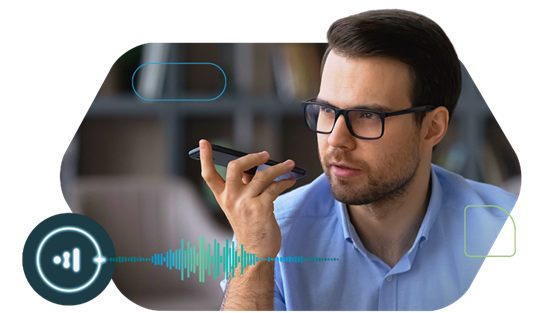
Service execution does not start on site. It starts when a request is initiated — by a customer, an internal department, or an end user. In many organizations, this intake phase still relies on voicemail, manual callbacks, email exchanges, or external call handling. These approaches can lead to incomplete information capture, delayed confirmations, repeated validation loops, and after-hours gaps.
As a result, planners and dispatchers spend significant time clarifying and structuring requests before they can be scheduled effectively. This affects schedule stability, technician utilization, first-time-fix performance, and ultimately service reliability.
When predictable execution and SLA adherence are key performance drivers, the intake and confirmation stage requires the same level of structure and process control as dispatching and routing. The integration of AI-powered voice agents into field service workflows offers one possible approach to standardizing communication and directly linking customer interaction to live planning environments.
In this webinar, we will explore:
- The role of structured intake in field service performance
- Typical inefficiencies and risk points in request handling
- How AI-powered voice agents can be embedded into existing service processes
- Organizational and process considerations for implementation
- Observed impact on planning stability, SLA alignment, and resource utilization
The session aims to provide practical insight and facilitate discussion within the Field Service learning network on how digital communication technologies can support operational control and execution discipline.
Presentation content

- The strategic role of First Contact in Field Service intake – Why the initial interaction determines data quality, scheduling stability, and SLA performance
- How to embed AI-Powered Voice Agents within (existing) Field Service intake workflows – Process integration, system interfaces, and governance considerations
- From structured conversation to confirmed Work Order – Standardizing data capture, validation logic, and automated scheduling triggers
- How to train dedicated AI Voice Agents for Field Service contexts – Use case definition, intent modelling, escalation rules, and continuous improvement
- Operational impact and Performance Indicators – Effects on planning efficiency, technician utilization, confirmation rates, and SLA adherence
- Implementation considerations and change management – Deployment approach, stakeholder alignment, risk mitigation, and adoption factors
Learning Objectives
By the end of this session, you know:
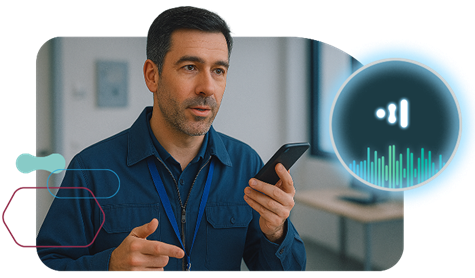
- how AI voice agents convert conversations directly into scheduled, confirmed jobs.
- how AI-driven scheduling connects availability, skills, routing logic, and parts planning in real time.
- how AI agents are trained and why this lowers long-term onboarding and training costs.
- how to evaluate measurable operational impact on workload, technician utilization, and SLA performance.
Target Audience
This webinar is designed for Field Service leaders, operations managers, planning and dispatch professionals, and digital transformation stakeholders who are responsible for service performance, SLA compliance, and workforce efficiency. It is particularly relevant for medium to large service organizations seeking to reduce operational variability at the point of request intake and strengthen execution predictability. Professionals involved in process optimization, system integration, and service governance will gain practical insight into how AI-powered voice agents can be embedded within existing workflows to standardize data capture, improve planning stability, and enhance overall resource utilization.

About the speaker
Matthias Lübko leads Fieldcode with the mission to bring service management into a new era of Zero-Touch automation and operational excellence. His focus is on improving customer experience through faster issue resolution, seamless scheduling, and higher efficiency across service organizations.
With more than 20 years of hands-on experience in field service management, he has worked as a field service technician, dispatcher, service manager, and executive. This broad operational background enables him to understand service coordination challenges end to end and to guide multinational service organizations in implementing scalable automation strategies.
As he states: “Zero-Touch is about automating every step, from ticket creation to completion, to make life easier for your teams. By streamlining the entire process, from scheduling to dispatch, we can eliminate manual tasks and let teams focus on delivering high-quality service.”

BEMAS Corporate Sponsors