What Is (Wrong With) MTTF and MTBF?
Mean Time To Failure and Mean Time Between Failure are widely used reliability metrics, but they are also widely misunderstood. In many organisations, MTTF or MTBF values are treated as practical indicators for maintenance planning, component replacement or service intervals. A common assumption is that an item with an MTTF of 1,000 hours can be expected to operate reliably until that point.
In reality, MTTF and MTBF do not represent a failure-free period. They are statistical means of random variables, and their practical meaning depends strongly on the nature of the failure process. Depending on whether an item wears in, wears out, or follows another type of failure behaviour, a significant proportion of items may already have failed by the time the MTTF or MTBF is reached. In some cases, using these values incorrectly can lead to unnecessary maintenance or even generate additional failures.
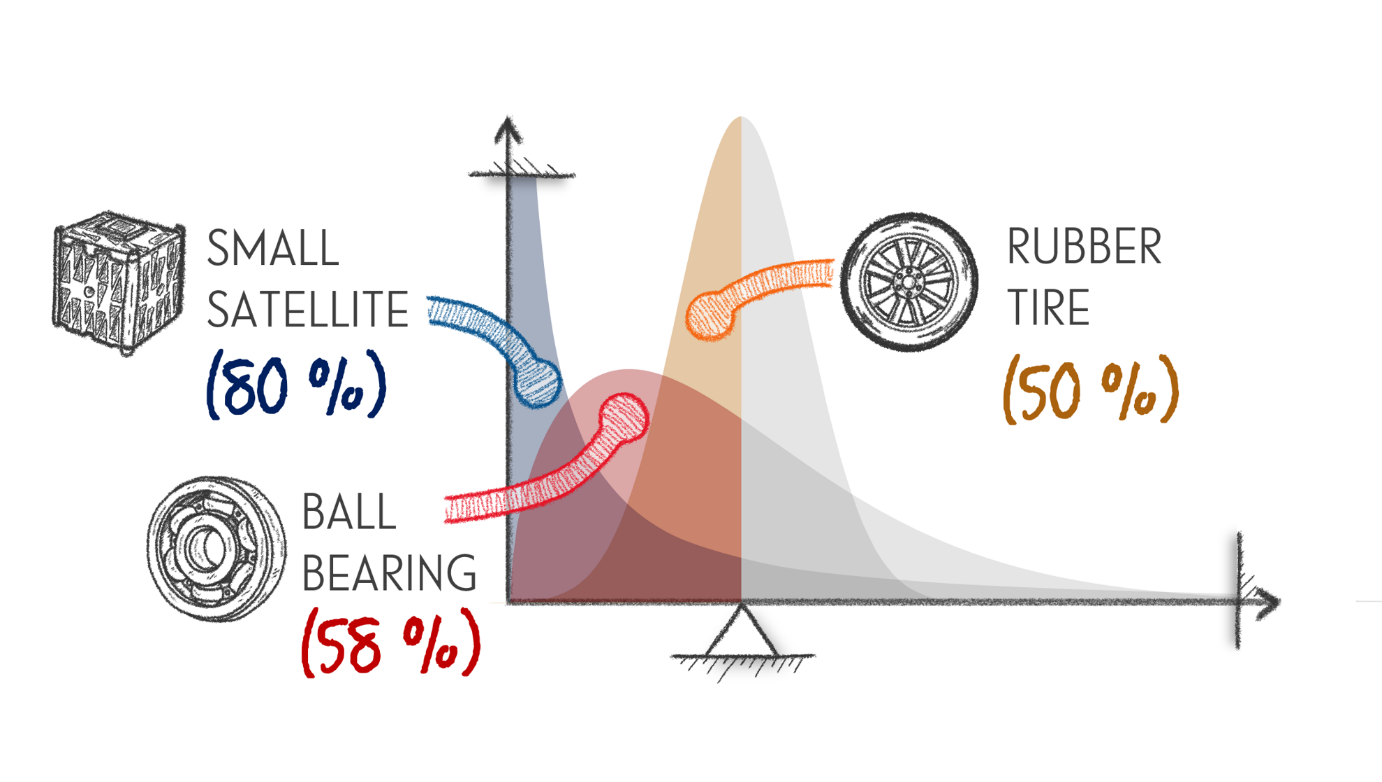
For asset owners, maintenance managers and reliability engineers, this creates an important challenge. Decisions based on misunderstood reliability metrics can affect availability, cost, safety and maintenance effectiveness. A clearer understanding of what MTTF and MTBF really mean helps avoid simplistic interpretations and supports better reliability and asset management decisions.
This webinar provides a simple and visual explanation of MTTF and MTBF, how they relate to probability density functions and reliability curves, and when these metrics should be used with caution.
Content of the webinar
- Introduction to random processes
- Why seemingly identical items can fail at different times
- What this means for maintenance and reliability analysis
- Understanding probability density curves
- Introduction to the Probability Density Function
- How different curve shapes reflect different failure behaviours
- The reliability curve
- How reliability changes over time or usage
- Visual explanation of the relationship between the reliability curve and the Probability Density Function
- What the “mean” of a random variable really means
- Why the mean is a statistical balance point
- How this concept relates to MTTF and MTBF
- Wear-in and wear-out behaviour
- How different types of failure influence the interpretation of MTTF and MTBF
- Why items that wear in should not automatically be serviced or replaced
- Using MTTF and MTBF in maintenance decisions
- When these metrics can provide useful insight
- When relying on them can lead to poor maintenance or reliability decisions
What you will learn
You learn how probability density curves describe different types of failure behaviour, including wear-in and wear-out patterns. The webinar also explains why the mean of a random variable is not a real-world failure threshold, and how the nature of failure influences the proportion of items that may already have failed by the MTTF or MTBF.
Join this webinar to develop a clearer understanding of MTTF and MTBF and to make better-informed maintenance and reliability decisions.
Practical information
14:45 Welcome to the BEMAS Live Learning Platform
15:00 Start of the presentation
16:00 Conclusion and Q&A

About the speaker
Dr. Christopher Jackson, PhD, Director of Acuitas Ltd, is a reliability engineering specialist, leader and logistics expert with extensive experience in helping organisations improve the reliability of their products and processes.
Dr. Jackson completed his PhD in Reliability Engineering at the University of Maryland in 2011. He is the director of Acuitas Reliability and has supported organisations across a wide range of sectors, including medical devices, military vehicles, small satellites and health systems. After a 17-year career in the Australian Army, where he served as Senior Reliability Engineer and retired as a lieutenant colonel, he established the Center for the Safety and Reliability of Autonomous Systems at UCLA.
He is the author of multiple reliability and management textbooks and teaches both professional education and postgraduate courses. Dr. Jackson is a Certified Reliability Engineer through the American Society for Quality, a member of Engineers Australia and a Chartered Professional Engineer.
Keep me posted
BEMAS Corporate Sponsors